
If you are using weighting to balance your sample, you can apply a weight variable directly in Caplena’s reporting. Once applied, all results displayed in the report will automatically reflect the specified weighting.
Applying Weights to a Report
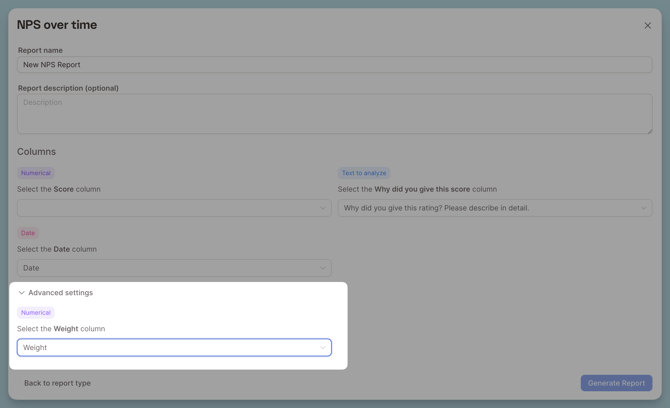
You can apply weights during the report creation process by selecting the Advanced settings.
Steps:
-
Go to Reports → Create new report
-
Select the template you want to use
-
Expand Advanced settings
-
Under Select the Weight column, choose the column containing your numeric weights
-
Create the report
After the report is created, Caplena automatically incorporates the chosen weights into all displayed metrics.
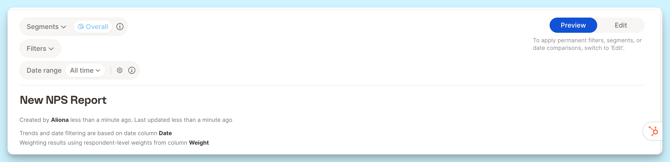
When a weight column is selected, Caplena will show a confirmation banner at the top of the report:
“Weighting results using respondent-level weights from column [Weight Column Name]”
Note:
Once a report is created, the weight column cannot be added or changed. If you need a version without weights, just create a new report using the same setup but leave the weight column unselected.
The Weight Variable needs to be Numerical
Needless to say, Caplena requires the weight column to be numerical. Make sure that when you initially import your data, the column is set as a numerical type, which happens automatically if it contains only numerical values.
Additional weighting-related features and improvements may be introduced in future updates.
How Rounding Works When Weighting Is Applied
When you apply weighting in Caplena, each respondent receives a weight value. These values are often decimals (e.g., 0.7, 1.2, 2.3). Because of this, counts can naturally include decimal numbers.
To keep reports clean and easy to understand, Caplena handles this as follows:
1. Displayed counts are rounded
All counts shown in the UI (charts, tooltips, key figures) are rounded to whole numbers.
This avoids confusing values like 0.4 or 7.8 respondents.
Displayed values = rounded integers
2. Calculations use the exact weighted decimals
Behind the scenes, all analytics use the full precise weighted numbers, including decimals:
-
frequencies, percentages
-
category/topic totals
-
correlations
-
drivers
-
significance tests
Calculations = full precision