

Preparing Your File
Format your file using these guidelines before uploading: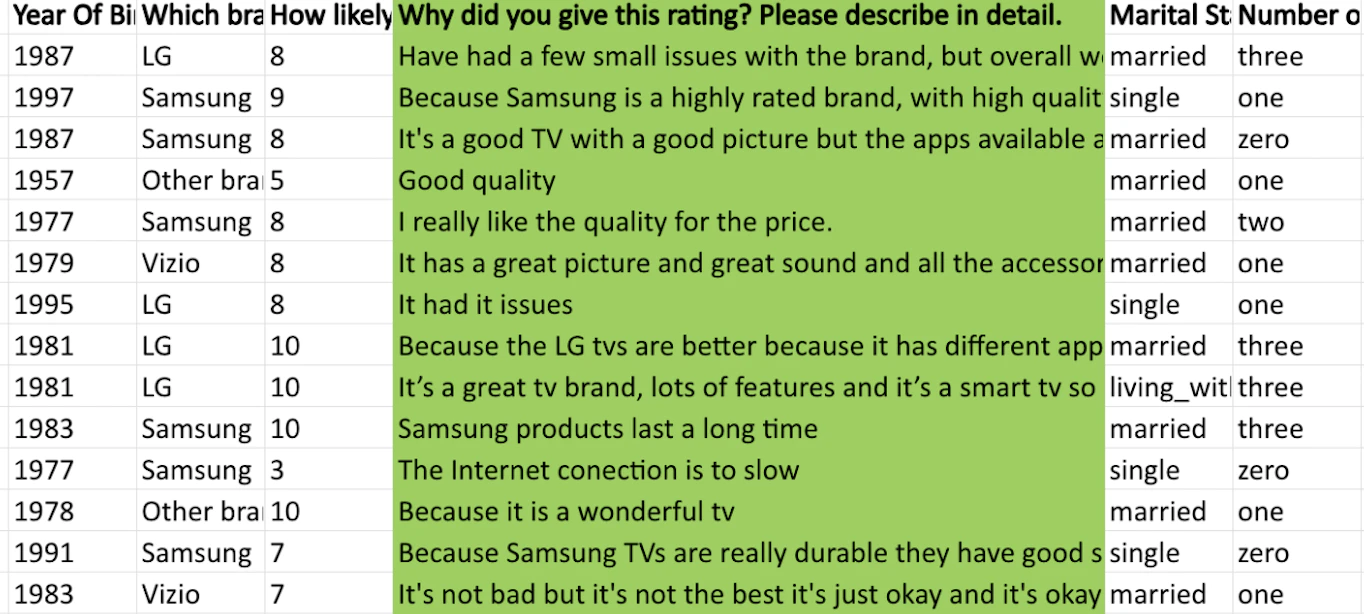
- Each row should represent one individual record, a respondent, review, or feedback entry
- The first row must contain column headers (variable names or question labels)
.xls .xlsx .csv .txt .spss .sav
Understanding Column Types
Text-to-Analyze (TTA)
This is where Caplena applies its AI analysis. TTA columns should contain open-ended responses — customer feedback, survey comments, or reviews. In the screenshot above, the green-highlighted “Reason for Rating” column is a TTA column. Caplena supports up to 25 open-text columns per project, each treated individually — no need to create separate projects per question.Other Columns
Other columns provide context but are not analyzed by AI. They’re optional but highly recommended to enrich your analysis.Metadata
Age, gender, customer segment, region
Identifiers
Response ID, user ID
Closed-ended
NPS score, star ratings, yes/no answers
You’re only billed for TTA columns, other columns are free.
Working with Dates
Include a date column if you’d like to filter or trend results over time.
Caplena automatically converts valid formats to ISO (
YYYY-MM-DD) and supports timestamps (e.g. 2022-01-30 14:35:00).
Timezone handling
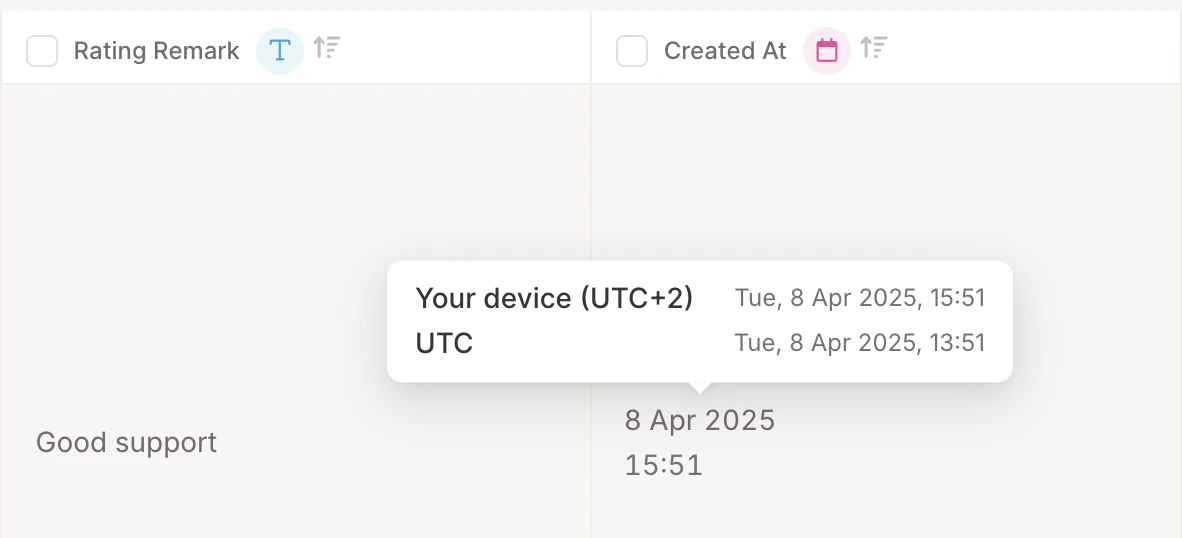
Date-time values without a specified timezone are interpreted as UTC. In the Data tab, hovering over a date-time entry shows the original UTC value; individual row views display time in your local timezone. If your data includes a timezone, Caplena will respect it.
Merging Multiple Columns
If several columns relate to the same question, merge them before uploading using Excel’sCONCATENATE function:
|| separator helps Caplena identify content from different sources. Add as many cells as needed.

Uploading Your File
Drag and drop your file into the upload box, or click to browse your device. Caplena will guide you through the next steps automatically.
Finalizing Your Data Setup
After uploading, Caplena takes you to the Organize Your Data screen to configure everything before analysis begins. 1. Select the right columns Use the checkboxes to include the columns you need. Use the filter bar to quickly find specific columns in larger datasets. 2. Understand column types Each column is automatically detected and categorized:
3. Preview your data
Check the sample data shown for each column to confirm formatting — especially for dates and numeric values.
4. Finalize
- Validate – confirm and continue
- Back – re-upload your file if something looks wrong
- Cancel – exit without saving changes